ICON - Stage 4 Suspension 2.5 Lift Kit - Tundra 2022-Current
ICON - Stage 4 Suspension 2.5 Lift Kit
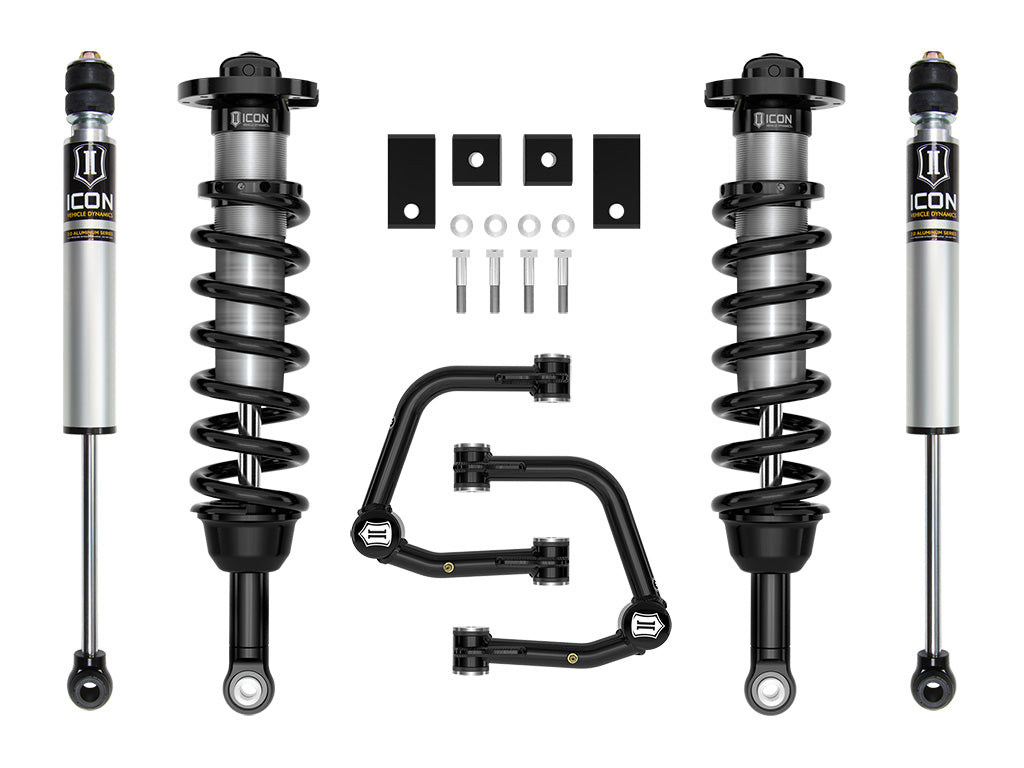
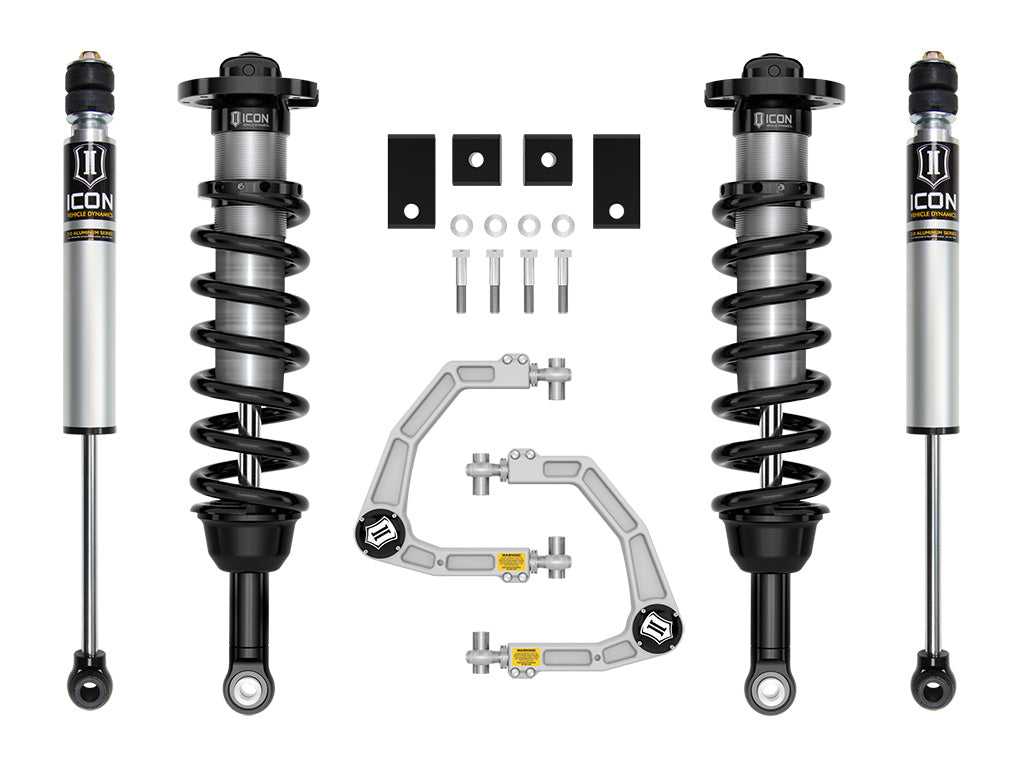
Unlock substantially more front suspension travel and confident everyday control from your 2022-current Toyota Tundra. ICON’s Stage 4 2.5 suspension system pairs adjustable internal-reservoir front coilovers with upgraded upper control arms, matched rear monotube shocks, and front sway-bar correction. The result is a balanced, fully rebuildable suspension package designed for improved road manners, weekend trail use, accurate alignment, and clearance for larger tires.
Stage 4 maximum-travel upgrade
The defining Stage 4 upgrade is the addition of ICON upper control arms. Their corrected geometry, built-in caster, improved component clearance, and high-articulation Delta Joint Pro allow the front suspension to use the coilovers’ available travel without binding. When properly installed and aligned, the system can provide up to approximately 40% more front wheel travel than stock.
2.5 Series front coilovers
Vehicle-specific 2.5-inch front coilovers provide increased piston area and damping capability compared with the factory suspension. Their threaded bodies allow ride-height adjustment, while internal reservoirs keep the package clean and straightforward. The dampers are fully rebuildable and can be re-tuned by a qualified suspension specialist as the vehicle’s use evolves.
Matched rear suspension control
ICON 2.0 aluminum monotube rear shocks use vehicle-specific valving to complement the front coilovers. They improve control and ride quality for daily driving and recreational trail use while remaining compatible with the factory rear springs and modest rear lift configurations.
Choose your control-arm construction
Tubular: Heavy-duty tubular steel upper control arms offer excellent strength, durability, and performance value. On most gasoline models, the typical front lift range is approximately 2–3.5 inches.
Billet: Precision-machined billet aluminum upper control arms provide premium construction, corrosion-resistant finishing, and convenient on-vehicle caster and camber adjustment. On most gasoline models, the typical front lift range is approximately 1.25–3.5 inches.
Key benefits
- Improved on-road ride quality, steering confidence, and off-road control
- Upgraded upper control arms correct geometry and expand alignment capability
- High-articulation joint design supports full bump and droop travel
- Front sway-bar drop brackets reduce link bind through the travel range
- Up to approximately 40% more front wheel travel than stock
- Fully rebuildable and re-tunable shock absorbers
- 100% bolt-on installation with no drilling, cutting, or welding required
Lift and tire fitment
- Designed to support tires up to approximately 35x12.50 inches with properly selected wheels
- Minor trimming or other modifications may be required depending on wheel offset, tire dimensions, alignment, and ride height
- Hybrid models generally achieve less front lift because of additional vehicle weight
- TRD Sport and TRD Pro models begin at different factory ride heights, so final measured lift will vary
- Rear shocks accommodate modest rear lift while retaining the factory rear coil springs
Best use
This Stage 4 configuration is an excellent choice for a premium daily driver and weekend trail truck that needs better front geometry, added wheel travel, improved damping, and larger-tire clearance without moving to remote-reservoir or electronically controlled shocks. Because it retains the factory rear springs, it is not intended as a dedicated constant-heavy-load spring package.
Important installation notes
- Final ride height depends on engine, trim, factory suspension package, and permanent accessory weight
- The factory TRD aluminum skid plate may require additional spacing hardware
- Professional installation, a complete alignment, and recalibration of applicable driver-assistance systems are strongly recommended